The maps in Le Mouvement Géographique - a magazine created 150 years ago - as unique witnesses of the Western imperialism
Philippe de Maeyer
Department of Geography, Ghent University, Belgium
Royal Academy for Overseas Sciences, Belgium
Jan Vandersmissen
Department of History, Ghent University, Belgium
Royal Academy for Overseas Sciences, Belgium
Related authors
Haiyang Shi, Geping Luo, Olaf Hellwich, Xiufeng He, Alishir Kurban, Philippe De Maeyer, and Tim Van de Voorde
Hydrol. Earth Syst. Sci., 27, 4551–4562, https://doi.org/10.5194/hess-27-4551-2023, https://doi.org/10.5194/hess-27-4551-2023, 2023
Short summary
Short summary
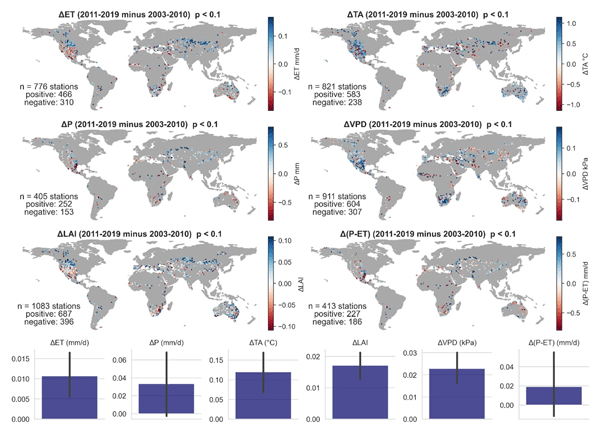
Using evidence from meteorological stations, this study assessed the climatic, hydrological, and ecological aridity changes in global drylands and their associated mechanisms. A decoupling between atmospheric, hydrological, and vegetation aridity was found. This highlights the added value of using station-scale data to assess dryland change as a complement to results based on coarse-resolution reanalysis data and land surface models.
Philippe De Maeyer
Abstr. Int. Cartogr. Assoc., 6, 49, https://doi.org/10.5194/ica-abs-6-49-2023, https://doi.org/10.5194/ica-abs-6-49-2023, 2023
Haiyang Shi, Geping Luo, Olaf Hellwich, Alishir Kurban, Philippe De Maeyer, and Tim Van de Voorde
Biogeosciences, 20, 2727–2741, https://doi.org/10.5194/bg-20-2727-2023, https://doi.org/10.5194/bg-20-2727-2023, 2023
Short summary
Short summary
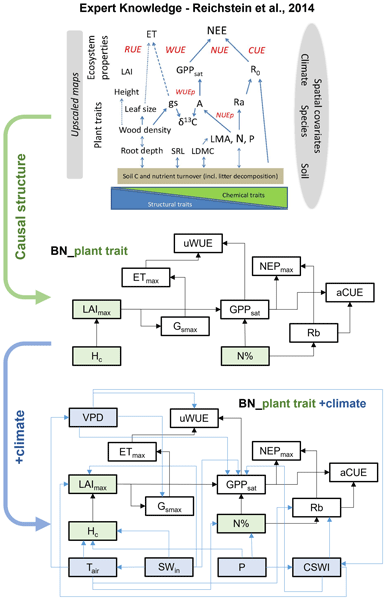
In studies on the relationship between ecosystem functions and climate and plant traits, previously used data-driven methods such as multiple regression and random forest may be inadequate for representing causality due to limitations such as covariance between variables. Based on FLUXNET site data, we used a causal graphical model to revisit the control of climate and vegetation traits over ecosystem functions.
Haiyang Shi, Geping Luo, Olaf Hellwich, Mingjuan Xie, Chen Zhang, Yu Zhang, Yuangang Wang, Xiuliang Yuan, Xiaofei Ma, Wenqiang Zhang, Alishir Kurban, Philippe De Maeyer, and Tim Van de Voorde
Hydrol. Earth Syst. Sci., 26, 4603–4618, https://doi.org/10.5194/hess-26-4603-2022, https://doi.org/10.5194/hess-26-4603-2022, 2022
Short summary
Short summary
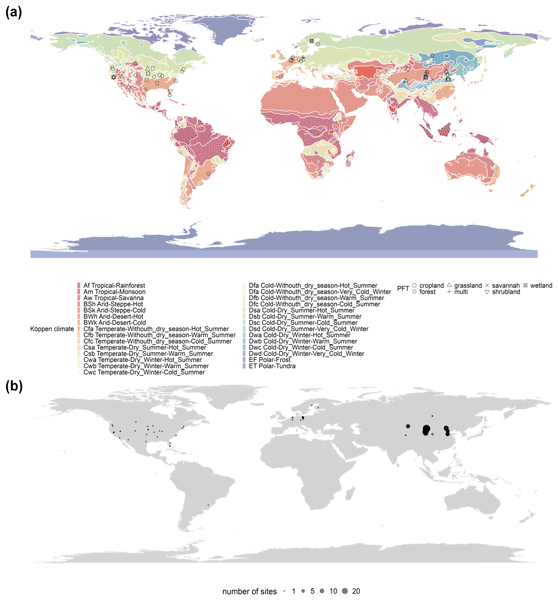
There have been many machine learning simulation studies based on eddy-covariance observations for water flux and evapotranspiration. We performed a meta-analysis of such studies to clarify the impact of different algorithms and predictors, etc., on the reported prediction accuracy. It can, to some extent, guide future global water flux modeling studies and help us better understand the terrestrial ecosystem water cycle.
Philippe De Maeyer
Abstr. Int. Cartogr. Assoc., 5, 3, https://doi.org/10.5194/ica-abs-5-3-2022, https://doi.org/10.5194/ica-abs-5-3-2022, 2022
Haiyang Shi, Geping Luo, Olaf Hellwich, Mingjuan Xie, Chen Zhang, Yu Zhang, Yuangang Wang, Xiuliang Yuan, Xiaofei Ma, Wenqiang Zhang, Alishir Kurban, Philippe De Maeyer, and Tim Van de Voorde
Biogeosciences, 19, 3739–3756, https://doi.org/10.5194/bg-19-3739-2022, https://doi.org/10.5194/bg-19-3739-2022, 2022
Short summary
Short summary
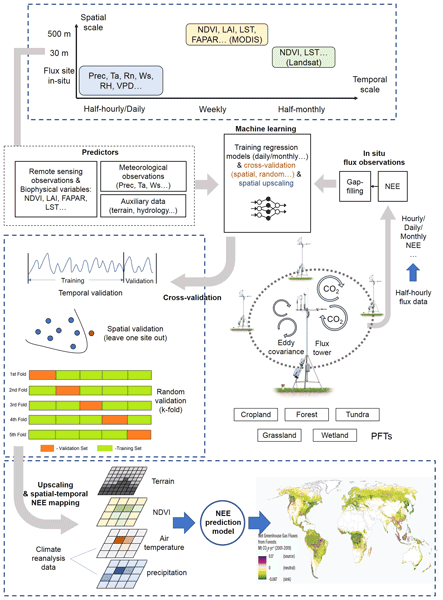
A number of studies have been conducted by using machine learning approaches to simulate carbon fluxes. We performed a meta-analysis of these net ecosystem exchange (NEE) simulations. Random forests and support vector machines performed better than other algorithms. Models with larger timescales had a lower accuracy. For different plant functional types (PFTs), there were significant differences in the predictors used and their effects on model accuracy.
Jana Ameye, Philippe De Maeyer, Mario Hernandez, and Luc Zwartjes
Abstr. Int. Cartogr. Assoc., 3, 5, https://doi.org/10.5194/ica-abs-3-5-2021, https://doi.org/10.5194/ica-abs-3-5-2021, 2021
Sara Top, Lola Kotova, Lesley De Cruz, Svetlana Aniskevich, Leonid Bobylev, Rozemien De Troch, Natalia Gnatiuk, Anne Gobin, Rafiq Hamdi, Arne Kriegsmann, Armelle Reca Remedio, Abdulla Sakalli, Hans Van De Vyver, Bert Van Schaeybroeck, Viesturs Zandersons, Philippe De Maeyer, Piet Termonia, and Steven Caluwaerts
Geosci. Model Dev., 14, 1267–1293, https://doi.org/10.5194/gmd-14-1267-2021, https://doi.org/10.5194/gmd-14-1267-2021, 2021
Short summary
Short summary
Detailed climate data are needed to assess the impact of climate change on human and natural systems. The performance of two high-resolution regional climate models, ALARO-0 and REMO2015, was investigated over central Asia, a vulnerable region where detailed climate information is scarce. In certain subregions the produced climate data are suitable for impact studies, but bias adjustment is required for subregions where significant biases have been identified.
Haiyang Shi, Geping Luo, Hongwei Zheng, Chunbo Chen, Olaf Hellwich, Jie Bai, Tie Liu, Shuang Liu, Jie Xue, Peng Cai, Huili He, Friday Uchenna Ochege, Tim Van de Voorde, and Philippe de Maeyer
Hydrol. Earth Syst. Sci., 25, 901–925, https://doi.org/10.5194/hess-25-901-2021, https://doi.org/10.5194/hess-25-901-2021, 2021
Short summary
Short summary
Some river basins are considered to be very similar because they have a similar background such as a transboundary, facing threats of human activities. But we still lack understanding of differences under their general similarities. Therefore, we proposed a framework based on a Bayesian network to group watersheds based on similarity levels and compare the causal and systematic differences within the group. We applied it to the Amu and Syr Darya River basin and discussed its universality.
Haiyang Shi, Geping Luo, Olaf Hellwich, Xiufeng He, Alishir Kurban, Philippe De Maeyer, and Tim Van de Voorde
Hydrol. Earth Syst. Sci., 27, 4551–4562, https://doi.org/10.5194/hess-27-4551-2023, https://doi.org/10.5194/hess-27-4551-2023, 2023
Short summary
Short summary
Using evidence from meteorological stations, this study assessed the climatic, hydrological, and ecological aridity changes in global drylands and their associated mechanisms. A decoupling between atmospheric, hydrological, and vegetation aridity was found. This highlights the added value of using station-scale data to assess dryland change as a complement to results based on coarse-resolution reanalysis data and land surface models.
Philippe De Maeyer
Abstr. Int. Cartogr. Assoc., 6, 49, https://doi.org/10.5194/ica-abs-6-49-2023, https://doi.org/10.5194/ica-abs-6-49-2023, 2023
Haiyang Shi, Geping Luo, Olaf Hellwich, Alishir Kurban, Philippe De Maeyer, and Tim Van de Voorde
Biogeosciences, 20, 2727–2741, https://doi.org/10.5194/bg-20-2727-2023, https://doi.org/10.5194/bg-20-2727-2023, 2023
Short summary
Short summary
In studies on the relationship between ecosystem functions and climate and plant traits, previously used data-driven methods such as multiple regression and random forest may be inadequate for representing causality due to limitations such as covariance between variables. Based on FLUXNET site data, we used a causal graphical model to revisit the control of climate and vegetation traits over ecosystem functions.
Haiyang Shi, Geping Luo, Olaf Hellwich, Mingjuan Xie, Chen Zhang, Yu Zhang, Yuangang Wang, Xiuliang Yuan, Xiaofei Ma, Wenqiang Zhang, Alishir Kurban, Philippe De Maeyer, and Tim Van de Voorde
Hydrol. Earth Syst. Sci., 26, 4603–4618, https://doi.org/10.5194/hess-26-4603-2022, https://doi.org/10.5194/hess-26-4603-2022, 2022
Short summary
Short summary
There have been many machine learning simulation studies based on eddy-covariance observations for water flux and evapotranspiration. We performed a meta-analysis of such studies to clarify the impact of different algorithms and predictors, etc., on the reported prediction accuracy. It can, to some extent, guide future global water flux modeling studies and help us better understand the terrestrial ecosystem water cycle.
Philippe De Maeyer
Abstr. Int. Cartogr. Assoc., 5, 3, https://doi.org/10.5194/ica-abs-5-3-2022, https://doi.org/10.5194/ica-abs-5-3-2022, 2022
Haiyang Shi, Geping Luo, Olaf Hellwich, Mingjuan Xie, Chen Zhang, Yu Zhang, Yuangang Wang, Xiuliang Yuan, Xiaofei Ma, Wenqiang Zhang, Alishir Kurban, Philippe De Maeyer, and Tim Van de Voorde
Biogeosciences, 19, 3739–3756, https://doi.org/10.5194/bg-19-3739-2022, https://doi.org/10.5194/bg-19-3739-2022, 2022
Short summary
Short summary
A number of studies have been conducted by using machine learning approaches to simulate carbon fluxes. We performed a meta-analysis of these net ecosystem exchange (NEE) simulations. Random forests and support vector machines performed better than other algorithms. Models with larger timescales had a lower accuracy. For different plant functional types (PFTs), there were significant differences in the predictors used and their effects on model accuracy.
Jana Ameye, Philippe De Maeyer, Mario Hernandez, and Luc Zwartjes
Abstr. Int. Cartogr. Assoc., 3, 5, https://doi.org/10.5194/ica-abs-3-5-2021, https://doi.org/10.5194/ica-abs-3-5-2021, 2021
Sara Top, Lola Kotova, Lesley De Cruz, Svetlana Aniskevich, Leonid Bobylev, Rozemien De Troch, Natalia Gnatiuk, Anne Gobin, Rafiq Hamdi, Arne Kriegsmann, Armelle Reca Remedio, Abdulla Sakalli, Hans Van De Vyver, Bert Van Schaeybroeck, Viesturs Zandersons, Philippe De Maeyer, Piet Termonia, and Steven Caluwaerts
Geosci. Model Dev., 14, 1267–1293, https://doi.org/10.5194/gmd-14-1267-2021, https://doi.org/10.5194/gmd-14-1267-2021, 2021
Short summary
Short summary
Detailed climate data are needed to assess the impact of climate change on human and natural systems. The performance of two high-resolution regional climate models, ALARO-0 and REMO2015, was investigated over central Asia, a vulnerable region where detailed climate information is scarce. In certain subregions the produced climate data are suitable for impact studies, but bias adjustment is required for subregions where significant biases have been identified.
Haiyang Shi, Geping Luo, Hongwei Zheng, Chunbo Chen, Olaf Hellwich, Jie Bai, Tie Liu, Shuang Liu, Jie Xue, Peng Cai, Huili He, Friday Uchenna Ochege, Tim Van de Voorde, and Philippe de Maeyer
Hydrol. Earth Syst. Sci., 25, 901–925, https://doi.org/10.5194/hess-25-901-2021, https://doi.org/10.5194/hess-25-901-2021, 2021
Short summary
Short summary
Some river basins are considered to be very similar because they have a similar background such as a transboundary, facing threats of human activities. But we still lack understanding of differences under their general similarities. Therefore, we proposed a framework based on a Bayesian network to group watersheds based on similarity levels and compare the causal and systematic differences within the group. We applied it to the Amu and Syr Darya River basin and discussed its universality.