
14 Mar 2025
| 14 Mar 2025
Real time application for estimation of urban pluvial flood damage
Sarah Lindenlaub
Institute of Environmental Science and Geography, University of Potsdam, Germany
Guilherme Samprogna Mohor
Institute of Environmental Science and Geography, University of Potsdam, Germany
Annegret Thieken
Institute of Environmental Science and Geography, University of Potsdam, Germany
Related authors
Guilherme Samprogna Mohor, Sarah Lindenlaub, and Annegret H. Thieken
EGUsphere, https://doi.org/10.5194/egusphere-2026-3462, https://doi.org/10.5194/egusphere-2026-3462, 2026
Short summary
Short summary
Here we present the Flood Damage Estimation Tool FlooDEsT, an algorithm for estimating flood damage caused by pluvial floods or surface water flooding. The tool is flexible in handling missing data. Once a hazard map is available, the application can provide damage estimates for a thousand buildings within seconds because geographical information and computational tools were optimised. This meets the demands for rapid impact assessments in the context of early warning.
Sophia Dobkowitz, Leon Frederik De Vos, Deva Charan Jarajapu, Sarah Lindenlaub, Guilherme Samprogna Mohor, Omar Seleem, and Axel Bronstert
Hydrol. Earth Syst. Sci., 30, 3041–3060, https://doi.org/10.5194/hess-30-3041-2026, https://doi.org/10.5194/hess-30-3041-2026, 2026
Short summary
Short summary
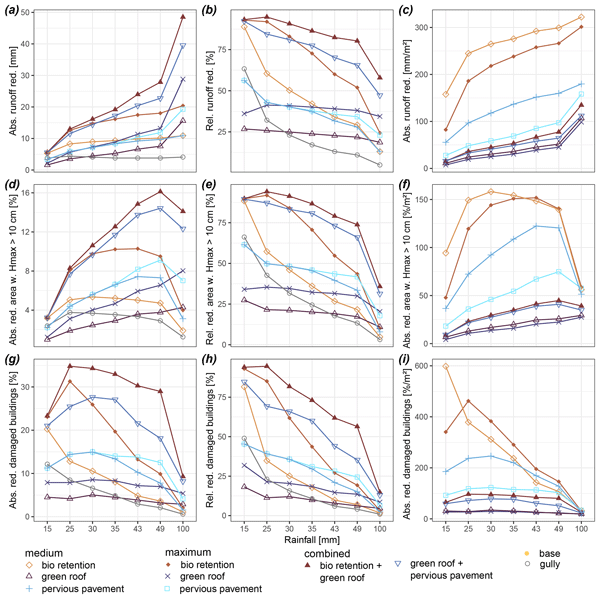
Surface sealing makes cities vulnerable to flooding caused by heavy rain. Green infrastructure, such as green roofs, can reduce flooding. This modelling study investigates the potential of green infrastructure to reduce runoff, flood water depth and building damage. Bioretention systems turned out to be the most space efficient compared to green roofs and pervious pavement. For larger rain events, more green infrastructure implementation is needed to achieve relevant flood mitigation.
Guilherme Samprogna Mohor, Sarah Lindenlaub, and Annegret H. Thieken
EGUsphere, https://doi.org/10.5194/egusphere-2026-3462, https://doi.org/10.5194/egusphere-2026-3462, 2026
Short summary
Short summary
Here we present the Flood Damage Estimation Tool FlooDEsT, an algorithm for estimating flood damage caused by pluvial floods or surface water flooding. The tool is flexible in handling missing data. Once a hazard map is available, the application can provide damage estimates for a thousand buildings within seconds because geographical information and computational tools were optimised. This meets the demands for rapid impact assessments in the context of early warning.
Sophia Dobkowitz, Leon Frederik De Vos, Deva Charan Jarajapu, Sarah Lindenlaub, Guilherme Samprogna Mohor, Omar Seleem, and Axel Bronstert
Hydrol. Earth Syst. Sci., 30, 3041–3060, https://doi.org/10.5194/hess-30-3041-2026, https://doi.org/10.5194/hess-30-3041-2026, 2026
Short summary
Short summary
Surface sealing makes cities vulnerable to flooding caused by heavy rain. Green infrastructure, such as green roofs, can reduce flooding. This modelling study investigates the potential of green infrastructure to reduce runoff, flood water depth and building damage. Bioretention systems turned out to be the most space efficient compared to green roofs and pervious pavement. For larger rain events, more green infrastructure implementation is needed to achieve relevant flood mitigation.
Timothy Tiggeloven, Colin Raymond, Marleen C. de Ruiter, Jana Sillmann, Annegret H. Thieken, Sophie L. Buijs, Roxana Ciurean, Emma Cordier, Julia M. Crummy, Lydia Cumiskey, Kelley De Polt, Melanie Duncan, Davide M. Ferrario, Wiebke S. Jäger, Elco E. Koks, Nicole van Maanen, Heather J. Murdock, Jaroslav Mysiak, Sadhana Nirandjan, Benjamin Poschlod, Peter Priesmeier, Nivedita Sairam, Pia-Johanna Schweizer, Tristian R. Stolte, Marie-Luise Zenker, James E. Daniell, Alexander Fekete, Christian M. Geiß, Marc J. C. van den Homberg, Sirkku K. Juhola, Christian Kuhlicke, Karen Lebek, Robert Šakić Trogrlić, Stefan Schneiderbauer, Silvia Torresan, Cees J. van Westen, Judith N. Claassen, Bijan Khazai, Virginia Murray, Julius Schlumberger, and Philip J. Ward
Geosci. Commun., 9, 185–221, https://doi.org/10.5194/gc-9-185-2026, https://doi.org/10.5194/gc-9-185-2026, 2026
Short summary
Short summary
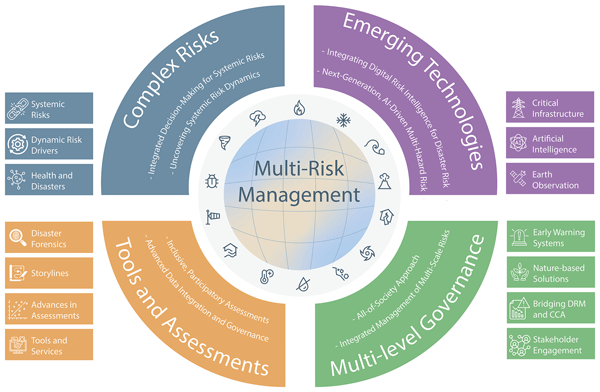
Natural hazards like floods, earthquakes, and landslides are often interconnected which may create bigger problems than when they occur alone. We studied expert discussions from an international conference to understand how scientists and policymakers can better prepare for these multi-hazards and use new technologies to protect its communities while contributing to dialogues about future international agreements beyond the Sendai Framework and supporting global sustainability goals.
Tim Busker, Daniela Rodriguez Castro, Sergiy Vorogushyn, Jaap Kwadijk, Davide Zoccatelli, Rafaella G. L. Oliveira, Heather J. Murdock, Laurent Pfister, Benjamin Dewals, Kymo Slager, Annegret H. Thieken, Jan Verkade, Patrick Willems, and Jeroen C. J. H. Aerts
Nat. Hazards Earth Syst. Sci., 26, 1457–1478, https://doi.org/10.5194/nhess-26-1457-2026, https://doi.org/10.5194/nhess-26-1457-2026, 2026
Short summary
Short summary
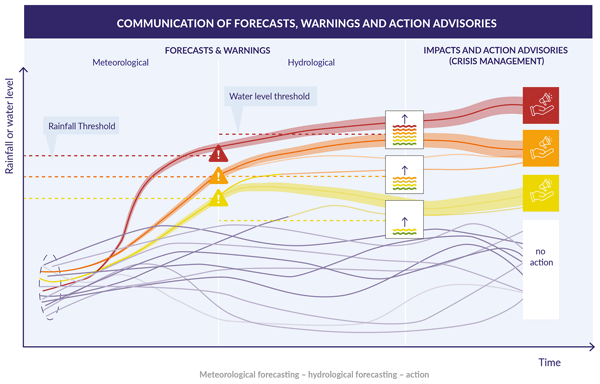
In July 2021, the Netherlands, Luxembourg, Germany, and Belgium were hit by an extreme flood event with over 200 fatalities. Our study provides, for the first time, critical insights into the operational flood early-warning systems in this entire region. Based on 14 expert interviews, we conclude that the systems strongly improved in all countries. Interviewees stressed the need for operational impact-based forecasts, but emphasized that its operational implementation is challenging.
Thi Dieu My Pham, Paul Hudson, Annegret H. Thieken, and Philip Bubeck
Nat. Hazards Earth Syst. Sci., 26, 1207–1230, https://doi.org/10.5194/nhess-26-1207-2026, https://doi.org/10.5194/nhess-26-1207-2026, 2026
Short summary
Short summary
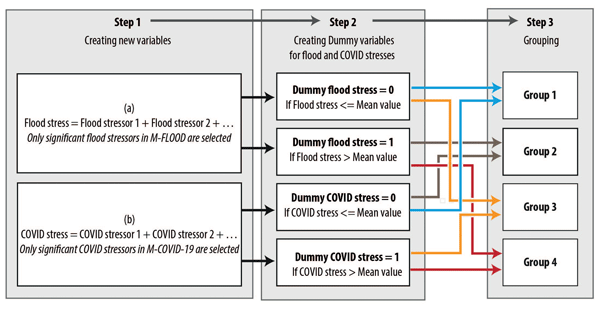
Experiencing severe flooding and COVID-19 together adversely affects mental health. A 2020 survey in Vietnam found that 20 % of participants experienced mental distress, whereas 80 % did not. Flood risk factors include livelihood difficulties, seeing dead human bodies, and being rescued; COVID-19 stressors relate to individual health impacts and interrupted education. These findings highlight the need to address health risks from multiple sources and provide more support for at-risk communities.
Karen Eva Lebek and Annegret Henriette Thieken
EGUsphere, https://doi.org/10.5194/egusphere-2026-645, https://doi.org/10.5194/egusphere-2026-645, 2026
Short summary
Short summary
As disasters worsen worldwide, "forensic" analysis is vital to uncover their root causes. This study evaluates a program at the University of Potsdam where PhD candidates formed rapid-response Task Forces to investigate recent events. We found this approach serves a dual purpose: it offers students hands-on, "real-world" training while providing the expert workforce needed for quick post-disaster research. To succeed, we suggest using diverse teams and providing early, targeted support.
Heather J. Murdock, Daniela Rodriguez Castro, Benjamin Dewals, Anna Heidenreich, and Annegret H. Thieken
EGUsphere, https://doi.org/10.5194/egusphere-2025-6376, https://doi.org/10.5194/egusphere-2025-6376, 2026
Short summary
Short summary
In July 2021, a severe flood occurred in the Walloon Region of Belgium, causing tragic losses and raising concerns about the warning system. With household survey data, we find that many affected people did not receive warnings and did not know how to respond. Statistical models show that information reception and demographic variables among other factors influence response behaviour. These findings highlight the importance of considering behaviour to enhance flood warning and response.
Ravikumar Guntu, Guilherme Samprogna Mohor, Annegret H. Thieken, Meike Müller, and Heidi Kreibich
Nat. Hazards Earth Syst. Sci., 26, 163–186, https://doi.org/10.5194/nhess-26-163-2026, https://doi.org/10.5194/nhess-26-163-2026, 2026
Short summary
Short summary
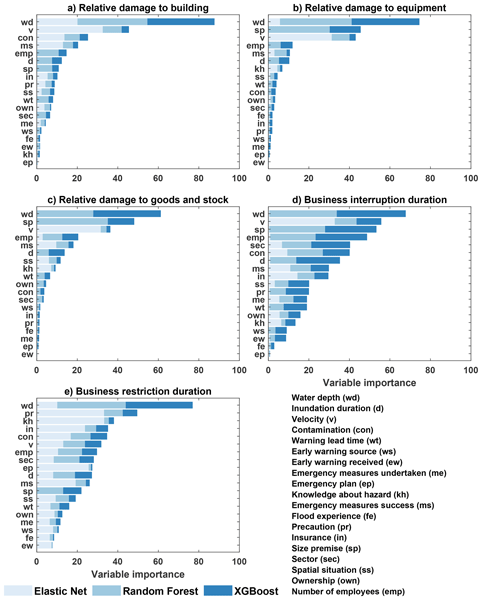
The 2021 flood in Germany caused severe damage to companies, with over half reporting losses above € 100 000. Using probabilistic models, we identify key factors driving direct damage and business interruption. Water depth, flow velocity and company exposure were key factors, but preparedness played a crucial role. Companies that took good precaution recovered faster. Our findings stress the value of early warnings and risk communication to reduce damage from unprecedented flood events.

Lisa Dillenardt and Annegret H. Thieken
Nat. Hazards Earth Syst. Sci., 25, 3257–3278, https://doi.org/10.5194/nhess-25-3257-2025, https://doi.org/10.5194/nhess-25-3257-2025, 2025
Short summary
Short summary
The influence of flood types, i.e., fluvial, flash, and urban pluvial floods, on whether and how flood-affected people prepare for flooding is unclear but relevant for effective risk communication. Survey data revealed the influence of flood type on the adaptive behavior of households recently affected by flooding. Most respondents were motivated to protect themselves, but flood-type-specific differences have been identified to enhance future risk communication strategies.
Cassiano Bastos Moroz and Annegret H. Thieken
Nat. Hazards Earth Syst. Sci., 24, 3299–3314, https://doi.org/10.5194/nhess-24-3299-2024, https://doi.org/10.5194/nhess-24-3299-2024, 2024
Short summary
Short summary
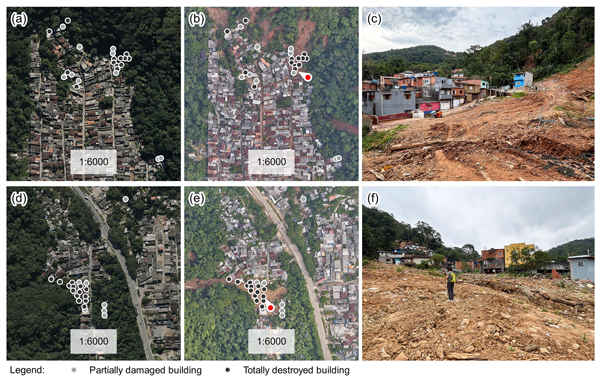
We evaluate the influence of urban processes on the impacts of the 2023 disaster that hit the North Coast of São Paulo, Brazil. The impacts of the disaster were largely associated with rapid urban expansion over the last 3 decades, with a recent occupation of risky areas. Moreover, lower-income neighborhoods were considerably more severely impacted, which evidences their increased exposure to such events. These results highlight the strong association between disaster risk and urban poverty.
Marie-Luise Zenker, Philip Bubeck, and Annegret H. Thieken
Nat. Hazards Earth Syst. Sci., 24, 2837–2856, https://doi.org/10.5194/nhess-24-2837-2024, https://doi.org/10.5194/nhess-24-2837-2024, 2024
Short summary
Short summary
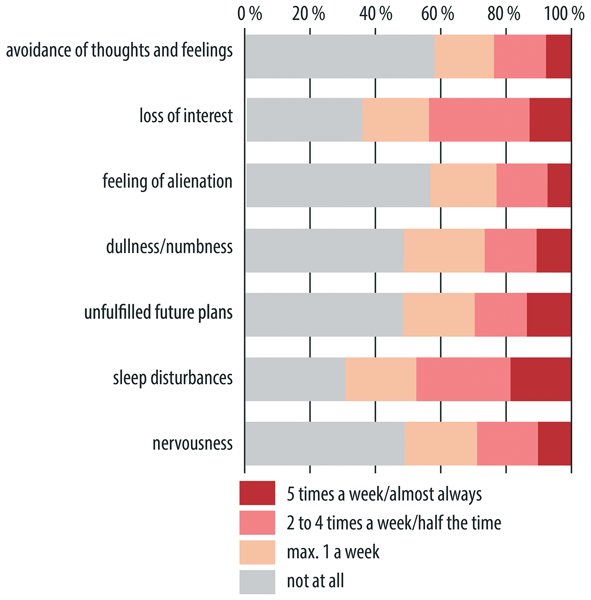
Despite the visible flood damage, mental health is a growing concern. Yet, there is limited data in Germany on mental health impacts after floods. A survey in a heavily affected region revealed that 28 % of respondents showed signs of post-traumatic stress disorder 1 year later. Risk factors include gender, serious injury or illness due to flooding, and feeling left alone to cope with impacts. The study highlights the need for tailored mental health support for flood-affected populations.
Heidi Kreibich, Kai Schröter, Giuliano Di Baldassarre, Anne F. Van Loon, Maurizio Mazzoleni, Guta Wakbulcho Abeshu, Svetlana Agafonova, Amir AghaKouchak, Hafzullah Aksoy, Camila Alvarez-Garreton, Blanca Aznar, Laila Balkhi, Marlies H. Barendrecht, Sylvain Biancamaria, Liduin Bos-Burgering, Chris Bradley, Yus Budiyono, Wouter Buytaert, Lucinda Capewell, Hayley Carlson, Yonca Cavus, Anaïs Couasnon, Gemma Coxon, Ioannis Daliakopoulos, Marleen C. de Ruiter, Claire Delus, Mathilde Erfurt, Giuseppe Esposito, Didier François, Frédéric Frappart, Jim Freer, Natalia Frolova, Animesh K. Gain, Manolis Grillakis, Jordi Oriol Grima, Diego A. Guzmán, Laurie S. Huning, Monica Ionita, Maxim Kharlamov, Dao Nguyen Khoi, Natalie Kieboom, Maria Kireeva, Aristeidis Koutroulis, Waldo Lavado-Casimiro, Hong-Yi Li, Maria Carmen LLasat, David Macdonald, Johanna Mård, Hannah Mathew-Richards, Andrew McKenzie, Alfonso Mejia, Eduardo Mario Mendiondo, Marjolein Mens, Shifteh Mobini, Guilherme Samprogna Mohor, Viorica Nagavciuc, Thanh Ngo-Duc, Huynh Thi Thao Nguyen, Pham Thi Thao Nhi, Olga Petrucci, Nguyen Hong Quan, Pere Quintana-Seguí, Saman Razavi, Elena Ridolfi, Jannik Riegel, Md Shibly Sadik, Nivedita Sairam, Elisa Savelli, Alexey Sazonov, Sanjib Sharma, Johanna Sörensen, Felipe Augusto Arguello Souza, Kerstin Stahl, Max Steinhausen, Michael Stoelzle, Wiwiana Szalińska, Qiuhong Tang, Fuqiang Tian, Tamara Tokarczyk, Carolina Tovar, Thi Van Thu Tran, Marjolein H. J. van Huijgevoort, Michelle T. H. van Vliet, Sergiy Vorogushyn, Thorsten Wagener, Yueling Wang, Doris E. Wendt, Elliot Wickham, Long Yang, Mauricio Zambrano-Bigiarini, and Philip J. Ward
Earth Syst. Sci. Data, 15, 2009–2023, https://doi.org/10.5194/essd-15-2009-2023, https://doi.org/10.5194/essd-15-2009-2023, 2023
Short summary
Short summary
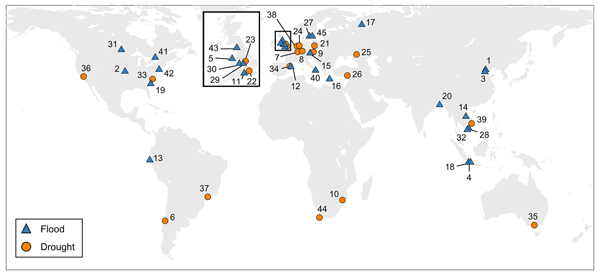
As the adverse impacts of hydrological extremes increase in many regions of the world, a better understanding of the drivers of changes in risk and impacts is essential for effective flood and drought risk management. We present a dataset containing data of paired events, i.e. two floods or two droughts that occurred in the same area. The dataset enables comparative analyses and allows detailed context-specific assessments. Additionally, it supports the testing of socio-hydrological models.
Annegret H. Thieken, Philip Bubeck, Anna Heidenreich, Jennifer von Keyserlingk, Lisa Dillenardt, and Antje Otto
Nat. Hazards Earth Syst. Sci., 23, 973–990, https://doi.org/10.5194/nhess-23-973-2023, https://doi.org/10.5194/nhess-23-973-2023, 2023
Short summary
Short summary
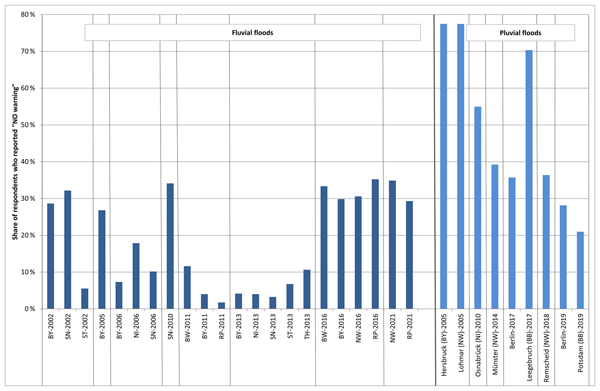
In July 2021 intense rainfall caused devastating floods in western Europe with 184 fatalities in the German federal states of North Rhine-Westphalia (NW) and Rhineland-Palatinate (RP), calling their warning system into question. An online survey revealed that 35 % of respondents from NW and 29 % from RP did not receive any warning. Many of those who were warned did not expect severe flooding, nor did they know how to react. The study provides entry points for improving Germany's warning system.
Alberto Caldas-Alvarez, Markus Augenstein, Georgy Ayzel, Klemens Barfus, Ribu Cherian, Lisa Dillenardt, Felix Fauer, Hendrik Feldmann, Maik Heistermann, Alexia Karwat, Frank Kaspar, Heidi Kreibich, Etor Emanuel Lucio-Eceiza, Edmund P. Meredith, Susanna Mohr, Deborah Niermann, Stephan Pfahl, Florian Ruff, Henning W. Rust, Lukas Schoppa, Thomas Schwitalla, Stella Steidl, Annegret H. Thieken, Jordis S. Tradowsky, Volker Wulfmeyer, and Johannes Quaas
Nat. Hazards Earth Syst. Sci., 22, 3701–3724, https://doi.org/10.5194/nhess-22-3701-2022, https://doi.org/10.5194/nhess-22-3701-2022, 2022
Short summary
Short summary
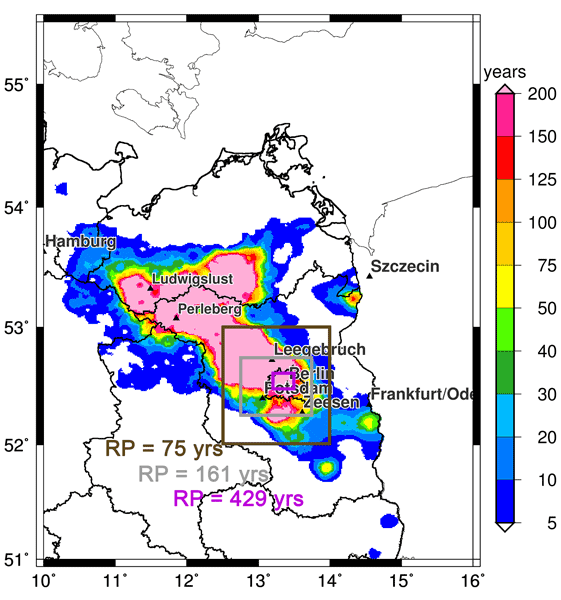
In a warming climate, extreme precipitation events are becoming more frequent. To advance our knowledge on such phenomena, we present a multidisciplinary analysis of a selected case study that took place on 29 June 2017 in the Berlin metropolitan area. Our analysis provides evidence of the extremeness of the case from the atmospheric and the impacts perspectives as well as new insights on the physical mechanisms of the event at the meteorological and climate scales.
Michael Dietze, Rainer Bell, Ugur Ozturk, Kristen L. Cook, Christoff Andermann, Alexander R. Beer, Bodo Damm, Ana Lucia, Felix S. Fauer, Katrin M. Nissen, Tobias Sieg, and Annegret H. Thieken
Nat. Hazards Earth Syst. Sci., 22, 1845–1856, https://doi.org/10.5194/nhess-22-1845-2022, https://doi.org/10.5194/nhess-22-1845-2022, 2022
Short summary
Short summary
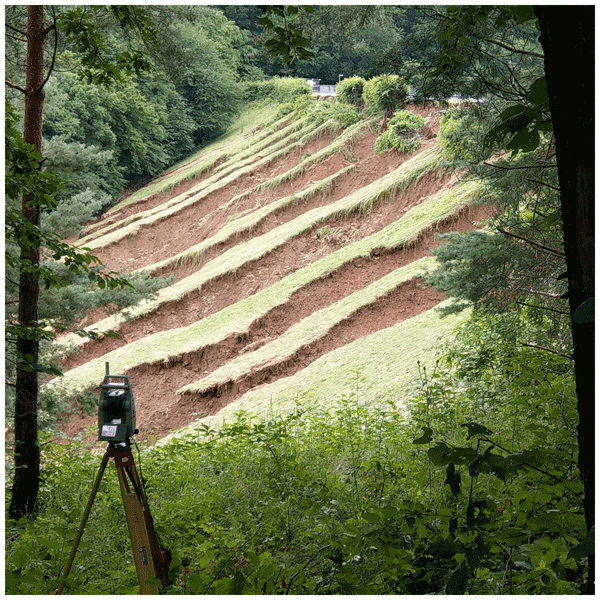
The flood that hit Europe in July 2021, specifically the Eifel, Germany, was more than a lot of fast-flowing water. The heavy rain that fell during the 3 d before also caused the slope to fail, recruited tree trunks that clogged bridges, and routed debris across the landscape. Especially in the upper parts of the catchments the flood was able to gain momentum. Here, we discuss how different landscape elements interacted and highlight the challenges of holistic future flood anticipation.
Annegret H. Thieken, Guilherme Samprogna Mohor, Heidi Kreibich, and Meike Müller
Nat. Hazards Earth Syst. Sci., 22, 165–185, https://doi.org/10.5194/nhess-22-165-2022, https://doi.org/10.5194/nhess-22-165-2022, 2022
Short summary
Short summary
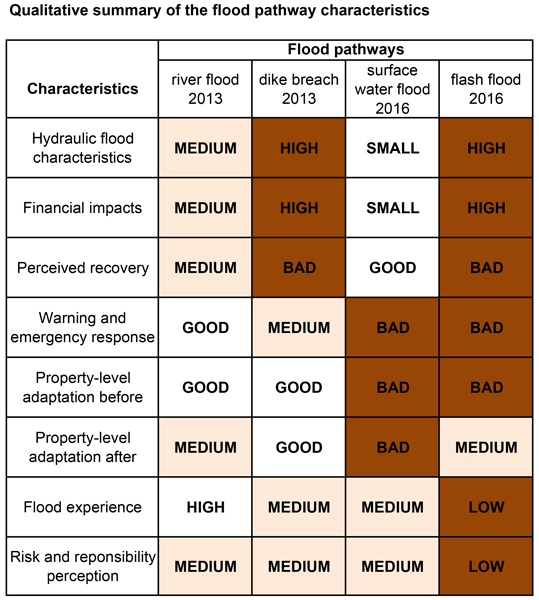
Various floods hit Germany recently. While there was a river flood with some dike breaches in 2013, flooding in 2016 resulted directly from heavy rainfall, causing overflowing drainage systems in urban areas and destructive flash floods in steep catchments. Based on survey data, we analysed how residents coped with these different floods. We observed significantly different flood impacts, warnings, behaviour and recovery, offering entry points for tailored risk communication and support.


