
10 Apr 2025
| 10 Apr 2025
Investigating alpine mass movements with space-borne synthetic aperture radars: current state, challenges, and perspectives
Andrea Manconi
WSL Institute for Snow and Avalanche Research SLF, Davos Dorf, Switzerland
Dept. of Earth and Planetary Sciences, ETH Zurich, Zurich, Switzerland
Gwendolyn Dasser
Dept. of Earth and Planetary Sciences, ETH Zurich, Zurich, Switzerland
WSL Institute for Snow and Avalanche Research SLF, Davos Dorf, Switzerland
Mylène Jacquemart
Dept. of Civil, Environmental and Geomatic Engineering, ETH Zurich, Zurich, Switzerland
Nicolas Oestreicher
Dep. Of Earth Sciences, University Geneva, Geneva, Switzerland
WSL Institute for Snow and Avalanche Research SLF, Davos Dorf, Switzerland
Livia Piermattei
Department of Geography, University of Zurich, Zurich, Switzerland
Tazio Strozzi
Gamma Remote Sensing AG, Gümligen, Switzerland
Related authors
Nicolas Oestreicher, Florian Denzinger, and Andrea Manconi
EGUsphere, https://doi.org/10.5194/egusphere-2026-5055, https://doi.org/10.5194/egusphere-2026-5055, 2026
This preprint is open for discussion and under review for Earth Observation (EO).
Short summary
Short summary
This study introduces a more accurate way to track ground movements caused by landslides. Understanding how the ground moves is crucial for predicting and managing landslide hazard. We developed a digital image correlation technique that corrects distortions in vertical measurements by accounting for horizontal shifts. We tested this method at a well-monitored landslide site in Switzerland, Brienz/Brinzauls, and compared it with another advanced technique, showing similarly accurate results.
Gwendolyn Dasser, Valentin T. Bickel, Marius Rüetschi, Mylène Jacquemart, Mathias Bavay, Elisabeth Hafner-Aeschbacher, Alec van Herwijnen, David Small, and Andrea Manconi
The Cryosphere, 20, 4811–4837, https://doi.org/10.5194/tc-20-4811-2026, https://doi.org/10.5194/tc-20-4811-2026, 2026
Short summary
Short summary
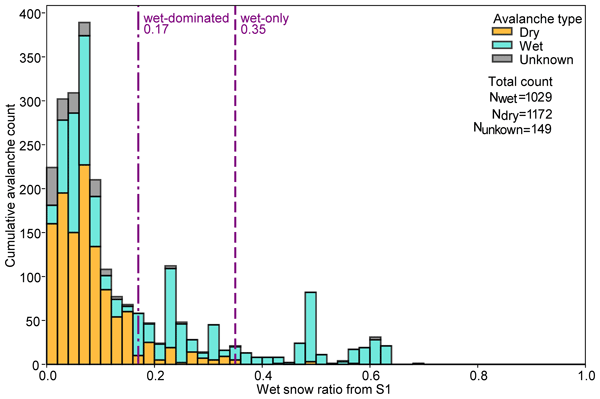
Understanding snowpack wetness is key to predicting wet snow avalanche releases, but detailed data is often limited. Using satellite radar, we monitored snowmelt over several seasons. We extracted a wet snow ratio threshold where the change from dry to wet snow avalanche dominated conditions is expected. By using local resolution weighting composites, we improved spatial resolution and showed our product to be more feasible for use in practice than the publicly available SAR Wet Snow layer.
Tazio Strozzi, Nina Jones, Federico Agliardi, Alessandro De Pedrini, Othmar Frey, Philipp Bernhard, Rafael Caduff, Christian Ambrosi, and Andrea Manconi
Nat. Hazards Earth Syst. Sci., 26, 2579–2607, https://doi.org/10.5194/nhess-26-2579-2026, https://doi.org/10.5194/nhess-26-2579-2026, 2026
Short summary
Short summary
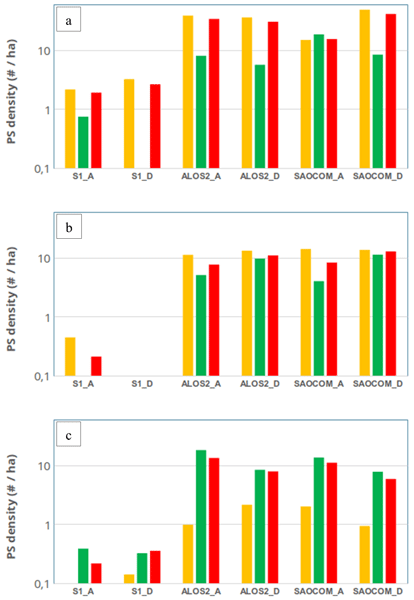
The latest satellite technology with longer wavelength radar improves our ability to detect and monitor large alpine rock slope instabilities. This approach works better than current satellite systems in forested areas and on fast-moving slopes, giving experts more reliable data to understand these major hazards. Our results from three locations in Italy and Switzerland also provide important recommendations for the preparation of future satellite radar missions.
Gwendolyn Dasser, Alessandro Maissen, Michele Volpi, Jordan Aaron, Florian Denzinger, Hugo Raetzo, and Andrea Manconi
EGUsphere, https://doi.org/10.5194/egusphere-2026-375, https://doi.org/10.5194/egusphere-2026-375, 2026
Short summary
Short summary
We aim to improve early landslide detection and monitoring by automating signal segmentation of Sentinel-1 radar interferograms. We first compared how different experts map mass-movement related signals on interferograms using ten case studies, identifying dataset uncertainties and limitations. We then trained and evaluated deep learning approaches to perform segmentation. Finally showing that models can achieve results comparable to expert variability while improving efficiency.
Jane Walden, Mylène Jacquemart, Bretwood Higman, Romain Hugonnet, Andrea Manconi, and Daniel Farinotti
Nat. Hazards Earth Syst. Sci., 25, 2045–2073, https://doi.org/10.5194/nhess-25-2045-2025, https://doi.org/10.5194/nhess-25-2045-2025, 2025
Short summary
Short summary
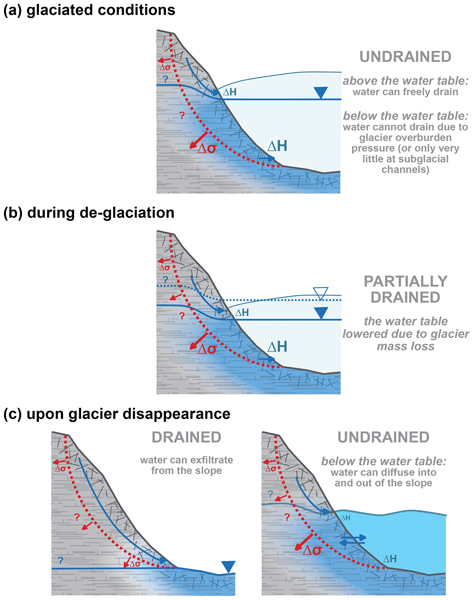
We studied eight glacier-adjacent landslides in Alaska and found that slope movement increased at four sites as the glacier retreated past the landslide area. Movement at other sites may be due to heavy precipitation or increased glacier thinning, and two sites showed little to no motion. We suggest that landslides near waterbodies may be especially vulnerable to acceleration, which we guess is due to faster retreat rates of water-terminating glaciers and changing water flow in the slope.
Andrea Manconi, Yves Bühler, Andreas Stoffel, Johan Gaume, Qiaoping Zhang, and Valentyn Tolpekin
Nat. Hazards Earth Syst. Sci., 24, 3833–3839, https://doi.org/10.5194/nhess-24-3833-2024, https://doi.org/10.5194/nhess-24-3833-2024, 2024
Short summary
Short summary
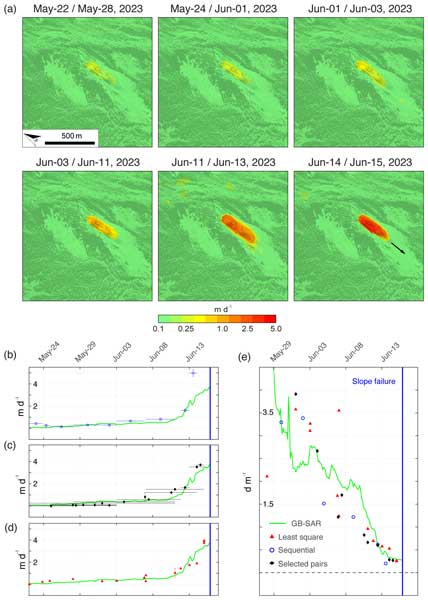
Our research reveals the power of high-resolution satellite synthetic-aperture radar (SAR) imagery for slope deformation monitoring. Using ICEYE data over the Brienz/Brinzauls instability, we measured surface velocity and mapped the landslide event with unprecedented precision. This underscores the potential of satellite SAR for timely hazard assessment in remote regions and aiding disaster mitigation efforts effectively.
Kristina Juliana Reinders, Govert Frederik Verhoeven, Luca Sartorelli, Ramon Hanssen, and Andrea Manconi
EGUsphere, https://doi.org/10.5194/egusphere-2023-2321, https://doi.org/10.5194/egusphere-2023-2321, 2023
Preprint archived
Short summary
Short summary
We investigated if radar data from the Sentinel-1 satellite can be used to assess displacements in permafrost areas in the Swiss alps. We discovered that 92 % of the permafrost areas can be visible with Sentinel-1. Next, based on displacement times series derived from radar data we revealed that the ground movements in permafrost areas are 2–3 times as large than in permafrost without areas. This result can help in monitoring permafrost areas and update current permafrost maps.
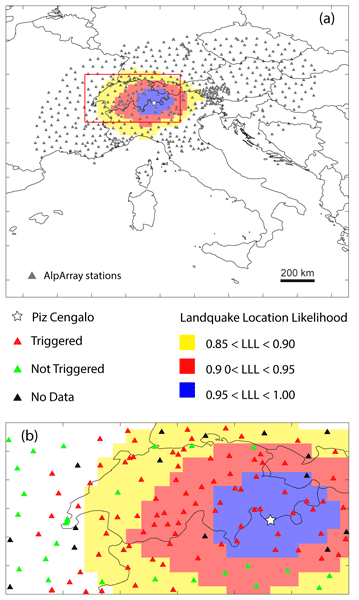
Andrea Manconi, Alessandro C. Mondini, and the AlpArray working group
Nat. Hazards Earth Syst. Sci., 22, 1655–1664, https://doi.org/10.5194/nhess-22-1655-2022, https://doi.org/10.5194/nhess-22-1655-2022, 2022
Short summary
Short summary
Information on when, where, and how landslide events occur is the key to building complete catalogues and performing accurate hazard assessments. Here we show a procedure that allows us to benefit from the increased density of seismic sensors installed on ground for earthquake monitoring and from the unprecedented availability of satellite radar data. We show how the procedure works on a recent sequence of landslides that occurred at Piz Cengalo (Swiss Alps) in 2017.
Nicolas Oestreicher, Florian Denzinger, and Andrea Manconi
EGUsphere, https://doi.org/10.5194/egusphere-2026-5055, https://doi.org/10.5194/egusphere-2026-5055, 2026
This preprint is open for discussion and under review for Earth Observation (EO).
Short summary
Short summary
This study introduces a more accurate way to track ground movements caused by landslides. Understanding how the ground moves is crucial for predicting and managing landslide hazard. We developed a digital image correlation technique that corrects distortions in vertical measurements by accounting for horizontal shifts. We tested this method at a well-monitored landslide site in Switzerland, Brienz/Brinzauls, and compared it with another advanced technique, showing similarly accurate results.
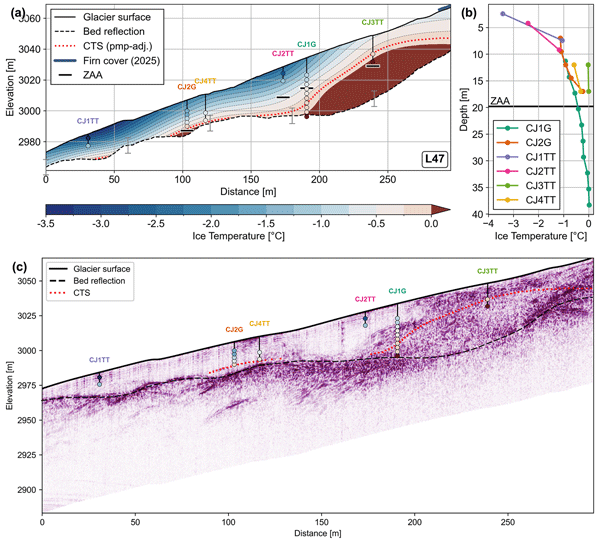
Janosch Beer, Mylène Jacquemart, Matthias Huss, Ilaria Santin, Gabriela Clara Racz, Christophe Ogier, Saskia Gindraux, Leo Hösli, Raphael Moser, James Irving, Mauro Fischer, and Daniel Farinotti
The Cryosphere, 20, 5453–5473, https://doi.org/10.5194/tc-20-5453-2026, https://doi.org/10.5194/tc-20-5453-2026, 2026
Short summary
Short summary
Small Alpine glaciers can exhibit a mix of cold and temperate ice, a polythermal structure, which can promote hazardous conditions. We drilled into six small Swiss glaciers and measured ice temperatures in boreholes. We found polythermal conditions in three of six sites and show that the thermal structure is linked to firn cover loss. Our results suggest that polythermal glaciers may be more common in the Alps than previously recognised.
Tazio Strozzi, Barbara Widhalm, Nina Jones, Julia Boike, Sofia Antonova, Birgit Heim, Sebastian Westermann, Andreas Kääb, and Annett Bartsch
EGUsphere, https://doi.org/10.5194/egusphere-2026-5477, https://doi.org/10.5194/egusphere-2026-5477, 2026
This preprint is open for discussion and under review for Earth Observation (EO).
Short summary
Short summary
Monitoring long-term surface subsidence induced by ground ice thaw across the pan-Arctic is crucial to detect permafrost changes and assess impacts caused by recent atmospheric warming. Using Sentinel-1 satellite radar data, we successfully measured subsidence rates in Siberia’s Lena Delta and found that they vary remarkably among the three main geomorphological units. To enable continuous, large-scale monitoring, satellite data records must maintain coherence from one summer season to the next.
Gwendolyn Dasser, Valentin T. Bickel, Marius Rüetschi, Mylène Jacquemart, Mathias Bavay, Elisabeth Hafner-Aeschbacher, Alec van Herwijnen, David Small, and Andrea Manconi
The Cryosphere, 20, 4811–4837, https://doi.org/10.5194/tc-20-4811-2026, https://doi.org/10.5194/tc-20-4811-2026, 2026
Short summary
Short summary
Understanding snowpack wetness is key to predicting wet snow avalanche releases, but detailed data is often limited. Using satellite radar, we monitored snowmelt over several seasons. We extracted a wet snow ratio threshold where the change from dry to wet snow avalanche dominated conditions is expected. By using local resolution weighting composites, we improved spatial resolution and showed our product to be more feasible for use in practice than the publicly available SAR Wet Snow layer.
Amaury Dehecq, Friedrich Knuth, Joaquín M. C. Belart, Livia Piermattei, Camillo Ressl, Adina Racoviteanu, Robert McNabb, David Shean, and Luc Godin
Int. Arch. Photogramm. Remote Sens. Spatial Inf. Sci., XLIX-B2-2026, 9–16, https://doi.org/10.5194/isprs-archives-XLIX-B2-2026-9-2026, https://doi.org/10.5194/isprs-archives-XLIX-B2-2026-9-2026, 2026
Robert Law, Mylène Jacquemart, Matthias Bühler, Mauro Angelo Werder, and Janosch Beer
EGUsphere, https://doi.org/10.5194/egusphere-2026-3329, https://doi.org/10.5194/egusphere-2026-3329, 2026
Short summary
Short summary
To understand how glaciers move and predict related hazards, we need detailed measurements of ice deformation. We tested a new approach using fibre-optic cables down a borehole drilled into a small Swiss Alpine glacier. The cables successfully tracked ice movement at an incredibly fine scale, supporting laboratory experiments showing nearly linear flow for ice close to its melting point. This method marks an important advance for studying glacier motion and predicting ice-related hazards.
Tazio Strozzi, Nina Jones, Federico Agliardi, Alessandro De Pedrini, Othmar Frey, Philipp Bernhard, Rafael Caduff, Christian Ambrosi, and Andrea Manconi
Nat. Hazards Earth Syst. Sci., 26, 2579–2607, https://doi.org/10.5194/nhess-26-2579-2026, https://doi.org/10.5194/nhess-26-2579-2026, 2026
Short summary
Short summary
The latest satellite technology with longer wavelength radar improves our ability to detect and monitor large alpine rock slope instabilities. This approach works better than current satellite systems in forested areas and on fast-moving slopes, giving experts more reliable data to understand these major hazards. Our results from three locations in Italy and Switzerland also provide important recommendations for the preparation of future satellite radar missions.
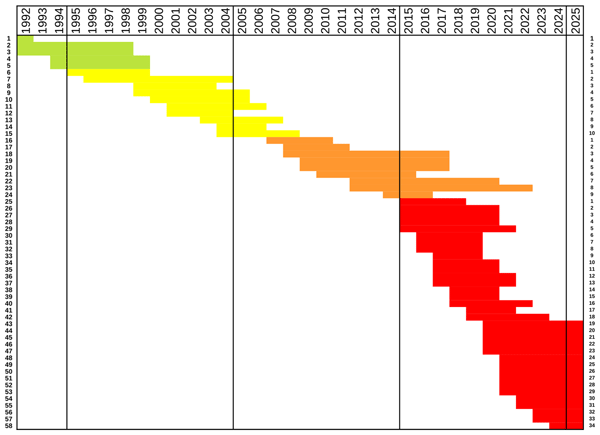
Tazio Strozzi, Erik Schytt Mannerfelt, Oliver Cartus, Maurizio Santoro, Thomas Schellenberger, and Andreas Kääb
The Cryosphere, 20, 1679–1697, https://doi.org/10.5194/tc-20-1679-2026, https://doi.org/10.5194/tc-20-1679-2026, 2026
Short summary
Short summary
By analysing 30 years of satellite SAR (Synthetic Aperture Radar) data, we have found that the number of glacier surges over Svalbard has tripled since 2015. We show that this increase is unlikely to be explained solely by improvements in data quality or by random fluctuations in surge frequency, suggesting that this trend is caused by an external forcing mechanism. Given our incomplete understanding of surge initiation, the cause of the observed threefold increase remains however uncertain.
Gwendolyn Dasser, Alessandro Maissen, Michele Volpi, Jordan Aaron, Florian Denzinger, Hugo Raetzo, and Andrea Manconi
EGUsphere, https://doi.org/10.5194/egusphere-2026-375, https://doi.org/10.5194/egusphere-2026-375, 2026
Short summary
Short summary
We aim to improve early landslide detection and monitoring by automating signal segmentation of Sentinel-1 radar interferograms. We first compared how different experts map mass-movement related signals on interferograms using ten case studies, identifying dataset uncertainties and limitations. We then trained and evaluated deep learning approaches to perform segmentation. Finally showing that models can achieve results comparable to expert variability while improving efficiency.
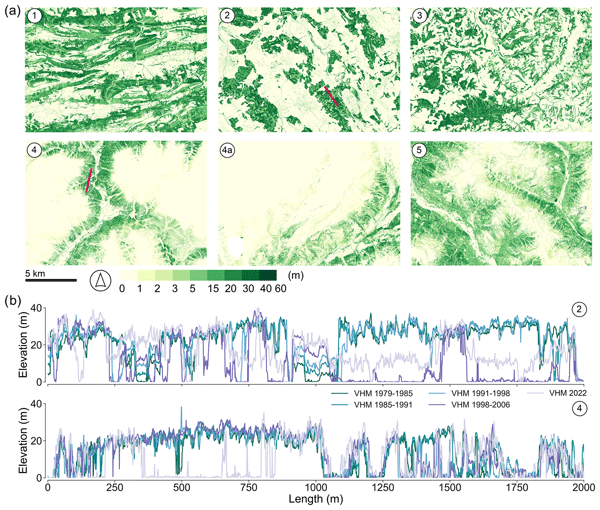
Mauro Marty, Livia Piermattei, Lars T. Waser, and Christian Ginzler
Earth Syst. Sci. Data, 17, 5811–5832, https://doi.org/10.5194/essd-17-5811-2025, https://doi.org/10.5194/essd-17-5811-2025, 2025
Short summary
Short summary
Millions of aerial photographs represent an enormous resource for geoscientists. In this study, we used freely available historical stereo images covering Switzerland (1979–2006) to derive four countrywide digital elevation models (DSMs) at a 1 m spatial resolution. Our DSMs achieved sub-metric accuracy compared to reference data and high image matching completeness, demonstrating the feasibility of capturing surface change at a high spatial resolution over different land cover classes.
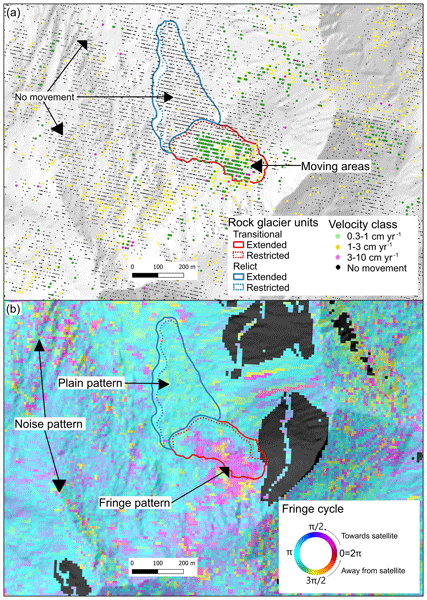
Alexandru Onaca, Flavius Sîrbu, Valentin Poncoş, Christin Hilbich, Tazio Strozzi, Petru Urdea, Răzvan Popescu, Oana Berzescu, Bernd Etzelmüller, Alfred Vespremeanu-Stroe, Mirela Vasile, Delia Teleagă, Dan Birtaş, Iosif Lopătiţă, Simon Filhol, Alexandru Hegyi, and Florina Ardelean
Earth Surf. Dynam., 13, 981–1001, https://doi.org/10.5194/esurf-13-981-2025, https://doi.org/10.5194/esurf-13-981-2025, 2025
Short summary
Short summary
This study establishes a methodology for the study of slow-moving rock glaciers in marginal permafrost and provides the basic knowledge for understanding rock glaciers in South East Europe. By using a combination of different methods (remote sensing, geophysical survey, thermal measurements), we found out that, on the transitional rock glaciers, low ground ice content (i.e. below 20 %) produces horizontal displacements of up to 3 cm per year.
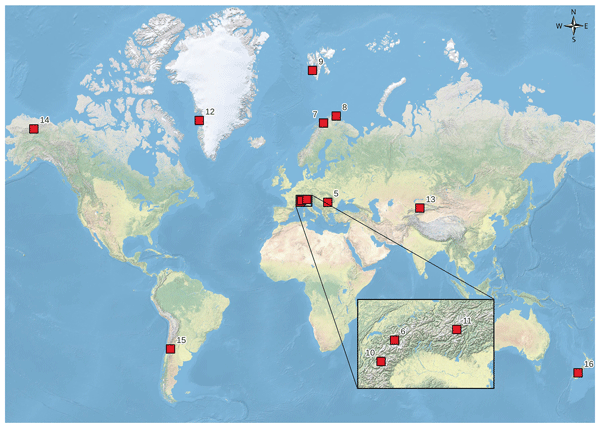
Line Rouyet, Tobias Bolch, Francesco Brardinoni, Rafael Caduff, Diego Cusicanqui, Margaret Darrow, Reynald Delaloye, Thomas Echelard, Christophe Lambiel, Cécile Pellet, Lucas Ruiz, Lea Schmid, Flavius Sirbu, and Tazio Strozzi
Earth Syst. Sci. Data, 17, 4125–4157, https://doi.org/10.5194/essd-17-4125-2025, https://doi.org/10.5194/essd-17-4125-2025, 2025
Short summary
Short summary
Rock glaciers are landforms generated by the creep of frozen ground (permafrost) in cold-climate mountains. Mapping rock glaciers contributes to documenting the distribution and the dynamics of mountain permafrost. We compiled inventories documenting the location, the characteristics, and the extent of rock glaciers in 12 mountain regions around the world. In each region, a team of operators performed the work following common rules and agreed on final solutions when discrepancies were identified.
Jane Walden, Mylène Jacquemart, Bretwood Higman, Romain Hugonnet, Andrea Manconi, and Daniel Farinotti
Nat. Hazards Earth Syst. Sci., 25, 2045–2073, https://doi.org/10.5194/nhess-25-2045-2025, https://doi.org/10.5194/nhess-25-2045-2025, 2025
Short summary
Short summary
We studied eight glacier-adjacent landslides in Alaska and found that slope movement increased at four sites as the glacier retreated past the landslide area. Movement at other sites may be due to heavy precipitation or increased glacier thinning, and two sites showed little to no motion. We suggest that landslides near waterbodies may be especially vulnerable to acceleration, which we guess is due to faster retreat rates of water-terminating glaciers and changing water flow in the slope.
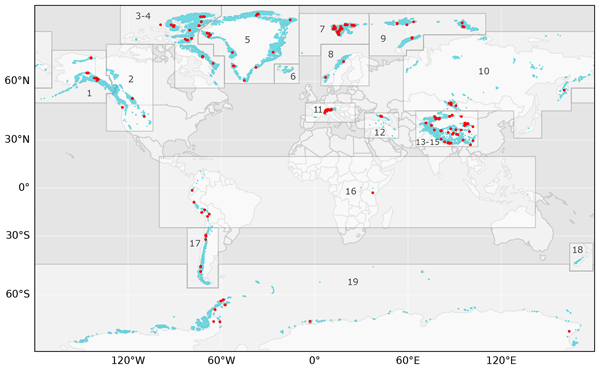
Mylène Jacquemart, Ethan Welty, Marcus Gastaldello, and Guillem Carcanade
Earth Syst. Sci. Data, 17, 1627–1666, https://doi.org/10.5194/essd-17-1627-2025, https://doi.org/10.5194/essd-17-1627-2025, 2025
Short summary
Short summary
We present glenglat, a database that contains measurements of ice temperature from 213 glaciers measured in 788 boreholes between 1842 and 2023. Even though ice temperature is a defining characteristic of any glacier, such measurements have been conducted on less than 1 ‰ of all glaciers globally. Our database permits us, for the first time, to investigate glacier temperature distributions at global or regional scales.
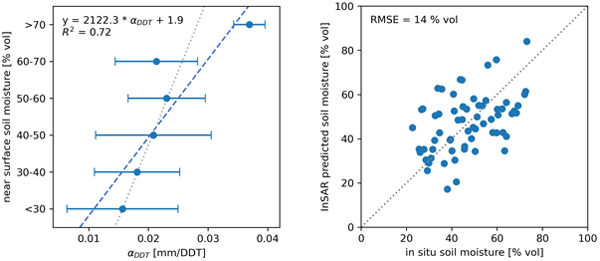
Barbara Widhalm, Annett Bartsch, Tazio Strozzi, Nina Jones, Artem Khomutov, Elena Babkina, Marina Leibman, Rustam Khairullin, Mathias Göckede, Helena Bergstedt, Clemens von Baeckmann, and Xaver Muri
The Cryosphere, 19, 1103–1133, https://doi.org/10.5194/tc-19-1103-2025, https://doi.org/10.5194/tc-19-1103-2025, 2025
Short summary
Short summary
Mapping soil moisture in Arctic permafrost regions is crucial for various activities, but it is challenging with typical satellite methods due to the landscape's diversity. Seasonal freezing and thawing cause the ground to periodically rise and subside. Our research demonstrates that this seasonal ground settlement, measured with Sentinel-1 satellite data, is larger in areas with wetter soils. This method helps to monitor permafrost degradation.
Andrea Manconi, Yves Bühler, Andreas Stoffel, Johan Gaume, Qiaoping Zhang, and Valentyn Tolpekin
Nat. Hazards Earth Syst. Sci., 24, 3833–3839, https://doi.org/10.5194/nhess-24-3833-2024, https://doi.org/10.5194/nhess-24-3833-2024, 2024
Short summary
Short summary
Our research reveals the power of high-resolution satellite synthetic-aperture radar (SAR) imagery for slope deformation monitoring. Using ICEYE data over the Brienz/Brinzauls instability, we measured surface velocity and mapped the landslide event with unprecedented precision. This underscores the potential of satellite SAR for timely hazard assessment in remote regions and aiding disaster mitigation efforts effectively.
Juditha Aga, Livia Piermattei, Luc Girod, Kristoffer Aalstad, Trond Eiken, Andreas Kääb, and Sebastian Westermann
Earth Surf. Dynam., 12, 1049–1070, https://doi.org/10.5194/esurf-12-1049-2024, https://doi.org/10.5194/esurf-12-1049-2024, 2024
Short summary
Short summary
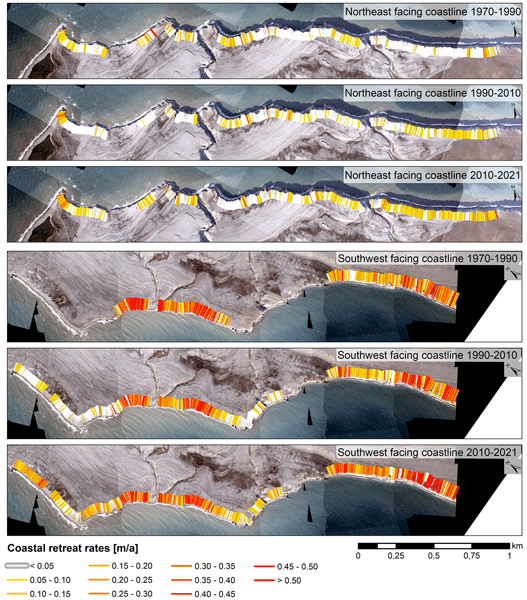
Coastal rock cliffs on Svalbard are considered to be fairly stable; however, long-term trends in coastal-retreat rates remain unknown. This study examines changes in the coastline position along Brøggerhalvøya, Svalbard, using aerial images from 1970, 1990, 2010, and 2021. Our analysis shows that coastal-retreat rates accelerate during the period 2010–2021, which coincides with increasing storminess and retreating sea ice.
Livia Piermattei, Michael Zemp, Christian Sommer, Fanny Brun, Matthias H. Braun, Liss M. Andreassen, Joaquín M. C. Belart, Etienne Berthier, Atanu Bhattacharya, Laura Boehm Vock, Tobias Bolch, Amaury Dehecq, Inés Dussaillant, Daniel Falaschi, Caitlyn Florentine, Dana Floricioiu, Christian Ginzler, Gregoire Guillet, Romain Hugonnet, Matthias Huss, Andreas Kääb, Owen King, Christoph Klug, Friedrich Knuth, Lukas Krieger, Jeff La Frenierre, Robert McNabb, Christopher McNeil, Rainer Prinz, Louis Sass, Thorsten Seehaus, David Shean, Désirée Treichler, Anja Wendt, and Ruitang Yang
The Cryosphere, 18, 3195–3230, https://doi.org/10.5194/tc-18-3195-2024, https://doi.org/10.5194/tc-18-3195-2024, 2024
Short summary
Short summary
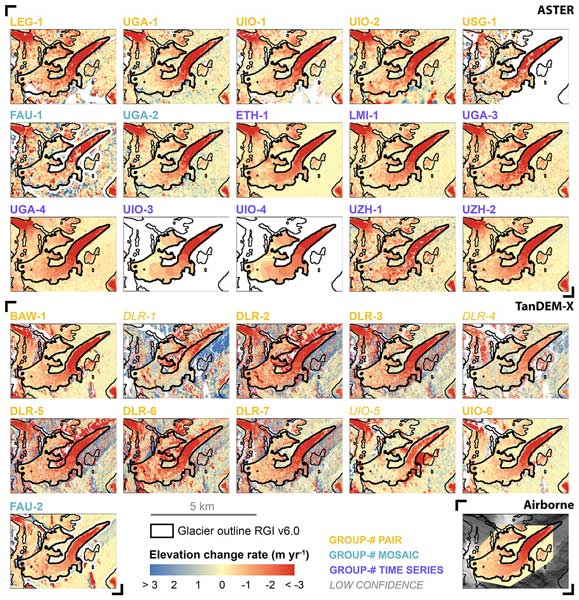
Satellites have made it possible to observe glacier elevation changes from all around the world. In the present study, we compared the results produced from two different types of satellite data between different research groups and against validation measurements from aeroplanes. We found a large spread between individual results but showed that the group ensemble can be used to reliably estimate glacier elevation changes and related errors from satellite data.
Aldo Bertone, Nina Jones, Volkmar Mair, Riccardo Scotti, Tazio Strozzi, and Francesco Brardinoni
The Cryosphere, 18, 2335–2356, https://doi.org/10.5194/tc-18-2335-2024, https://doi.org/10.5194/tc-18-2335-2024, 2024
Short summary
Short summary
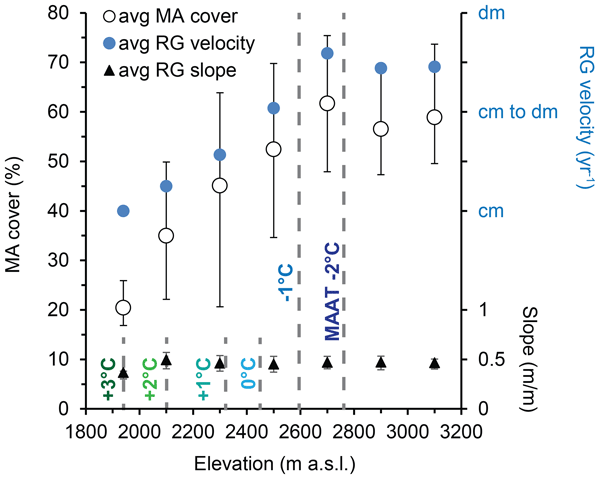
Traditional inventories display high uncertainty in discriminating between intact (permafrost-bearing) and relict (devoid) rock glaciers (RGs). Integration of InSAR-based kinematics in South Tyrol affords uncertainty reduction and depicts a broad elevation belt of relict–intact coexistence. RG velocity and moving area (MA) cover increase linearly with elevation up to an inflection at 2600–2800 m a.s.l., which we regard as a signature of sporadic-to-discontinuous permafrost transition.
Moritz Altmann, Madlene Pfeiffer, Florian Haas, Jakob Rom, Fabian Fleischer, Tobias Heckmann, Livia Piermattei, Michael Wimmer, Lukas Braun, Manuel Stark, Sarah Betz-Nutz, and Michael Becht
Earth Surf. Dynam., 12, 399–431, https://doi.org/10.5194/esurf-12-399-2024, https://doi.org/10.5194/esurf-12-399-2024, 2024
Short summary
Short summary
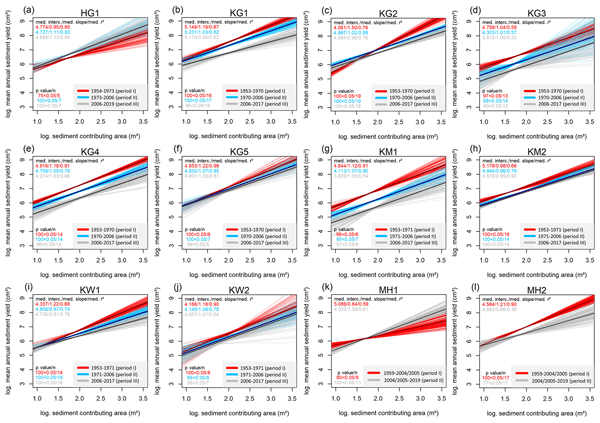
We show a long-term erosion monitoring of several sections on Little Ice Age lateral moraines with derived sediment yield from historical and current digital elevation modelling (DEM)-based differences. The first study period shows a clearly higher range of variability of sediment yield within the sites than the later periods. In most cases, a decreasing trend of geomorphic activity was observed.
Kristina Juliana Reinders, Govert Frederik Verhoeven, Luca Sartorelli, Ramon Hanssen, and Andrea Manconi
EGUsphere, https://doi.org/10.5194/egusphere-2023-2321, https://doi.org/10.5194/egusphere-2023-2321, 2023
Preprint archived
Short summary
Short summary
We investigated if radar data from the Sentinel-1 satellite can be used to assess displacements in permafrost areas in the Swiss alps. We discovered that 92 % of the permafrost areas can be visible with Sentinel-1. Next, based on displacement times series derived from radar data we revealed that the ground movements in permafrost areas are 2–3 times as large than in permafrost without areas. This result can help in monitoring permafrost areas and update current permafrost maps.
Marius Schneider, Nicolas Oestreicher, Thomas Ehrat, and Simon Loew
Nat. Hazards Earth Syst. Sci., 23, 3337–3354, https://doi.org/10.5194/nhess-23-3337-2023, https://doi.org/10.5194/nhess-23-3337-2023, 2023
Short summary
Short summary
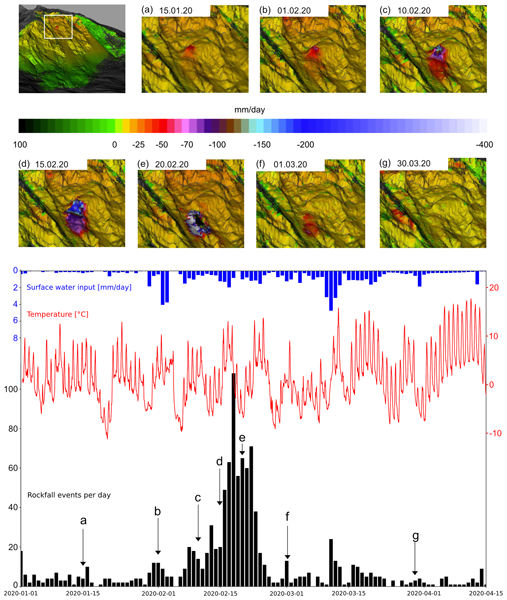
Rockfalls and their hazards are typically treated as statistical events based on rockfall catalogs, but only a few complete rockfall inventories are available today. Here, we present new results from a Doppler radar rockfall alarm system, which has operated since 2018 at a high frequency under all illumination and weather conditions at a site where frequent rockfall events threaten a village and road. The new data set is used to investigate rockfall triggers in an active rockslide complex.
Anja Løkkegaard, Kenneth D. Mankoff, Christian Zdanowicz, Gary D. Clow, Martin P. Lüthi, Samuel H. Doyle, Henrik H. Thomsen, David Fisher, Joel Harper, Andy Aschwanden, Bo M. Vinther, Dorthe Dahl-Jensen, Harry Zekollari, Toby Meierbachtol, Ian McDowell, Neil Humphrey, Anne Solgaard, Nanna B. Karlsson, Shfaqat A. Khan, Benjamin Hills, Robert Law, Bryn Hubbard, Poul Christoffersen, Mylène Jacquemart, Julien Seguinot, Robert S. Fausto, and William T. Colgan
The Cryosphere, 17, 3829–3845, https://doi.org/10.5194/tc-17-3829-2023, https://doi.org/10.5194/tc-17-3829-2023, 2023
Short summary
Short summary
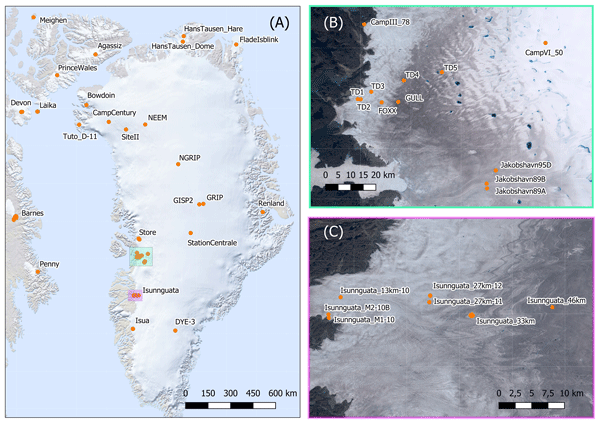
This study presents a database compiling 95 ice temperature profiles from the Greenland ice sheet and peripheral ice caps. Ice viscosity and hence ice flow are highly sensitive to ice temperature. To highlight the value of the database in evaluating ice flow simulations, profiles from the Greenland ice sheet are compared to a modeled temperature field. Reoccurring discrepancies between modeled and observed temperatures provide insight on the difficulties faced when simulating ice temperatures.
Katharina Ramskogler, Bettina Knoflach, Bernhard Elsner, Brigitta Erschbamer, Florian Haas, Tobias Heckmann, Florentin Hofmeister, Livia Piermattei, Camillo Ressl, Svenja Trautmann, Michael H. Wimmer, Clemens Geitner, Johann Stötter, and Erich Tasser
Biogeosciences, 20, 2919–2939, https://doi.org/10.5194/bg-20-2919-2023, https://doi.org/10.5194/bg-20-2919-2023, 2023
Short summary
Short summary
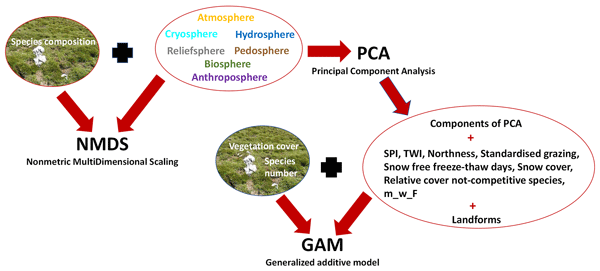
Primary succession in proglacial areas depends on complex driving forces. To concretise the complex effects and interaction processes, 39 known explanatory variables assigned to seven spheres were analysed via principal component analysis and generalised additive models. Key results show that in addition to time- and elevation-dependent factors, also disturbances alter vegetation development. The results are useful for debates on vegetation development in a warming climate.

Livia Piermattei, Tobias Heckmann, Sarah Betz-Nutz, Moritz Altmann, Jakob Rom, Fabian Fleischer, Manuel Stark, Florian Haas, Camillo Ressl, Michael H. Wimmer, Norbert Pfeifer, and Michael Becht
Earth Surf. Dynam., 11, 383–403, https://doi.org/10.5194/esurf-11-383-2023, https://doi.org/10.5194/esurf-11-383-2023, 2023
Short summary
Short summary
Alpine rivers have experienced strong changes over the last century. In the present study, we explore the potential of historical multi-temporal elevation models, combined with recent topographic data, to quantify 66 years (from 1953 to 2019) of river changes in the glacier forefield of an Alpine catchment. Thereby, we quantify the changes in the river form as well as the related sediment erosion and deposition.
Alessandro Cicoira, Samuel Weber, Andreas Biri, Ben Buchli, Reynald Delaloye, Reto Da Forno, Isabelle Gärtner-Roer, Stephan Gruber, Tonio Gsell, Andreas Hasler, Roman Lim, Philippe Limpach, Raphael Mayoraz, Matthias Meyer, Jeannette Noetzli, Marcia Phillips, Eric Pointner, Hugo Raetzo, Cristian Scapozza, Tazio Strozzi, Lothar Thiele, Andreas Vieli, Daniel Vonder Mühll, Vanessa Wirz, and Jan Beutel
Earth Syst. Sci. Data, 14, 5061–5091, https://doi.org/10.5194/essd-14-5061-2022, https://doi.org/10.5194/essd-14-5061-2022, 2022
Short summary
Short summary
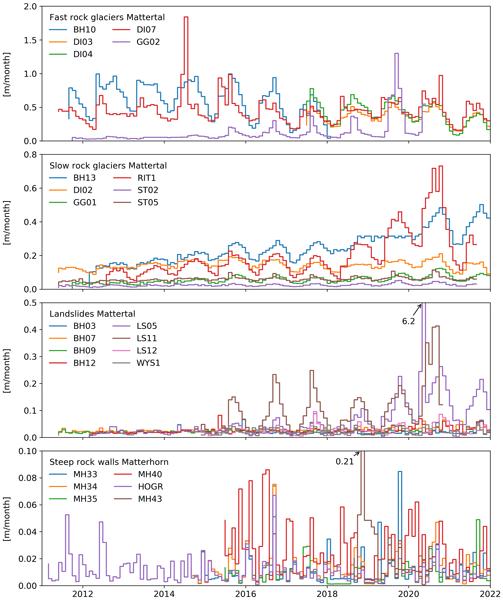
This paper documents a monitoring network of 54 positions, located on different periglacial landforms in the Swiss Alps: rock glaciers, landslides, and steep rock walls. The data serve basic research but also decision-making and mitigation of natural hazards. It is the largest dataset of its kind, comprising over 209 000 daily positions and additional weather data.
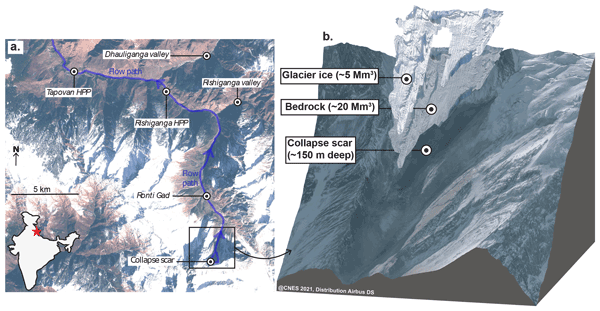
Maximillian Van Wyk de Vries, Shashank Bhushan, Mylène Jacquemart, César Deschamps-Berger, Etienne Berthier, Simon Gascoin, David E. Shean, Dan H. Shugar, and Andreas Kääb
Nat. Hazards Earth Syst. Sci., 22, 3309–3327, https://doi.org/10.5194/nhess-22-3309-2022, https://doi.org/10.5194/nhess-22-3309-2022, 2022
Short summary
Short summary
On 7 February 2021, a large rock–ice avalanche occurred in Chamoli, Indian Himalaya. The resulting debris flow swept down the nearby valley, leaving over 200 people dead or missing. We use a range of satellite datasets to investigate how the collapse area changed prior to collapse. We show that signs of instability were visible as early 5 years prior to collapse. However, it would likely not have been possible to predict the timing of the event from current satellite datasets.
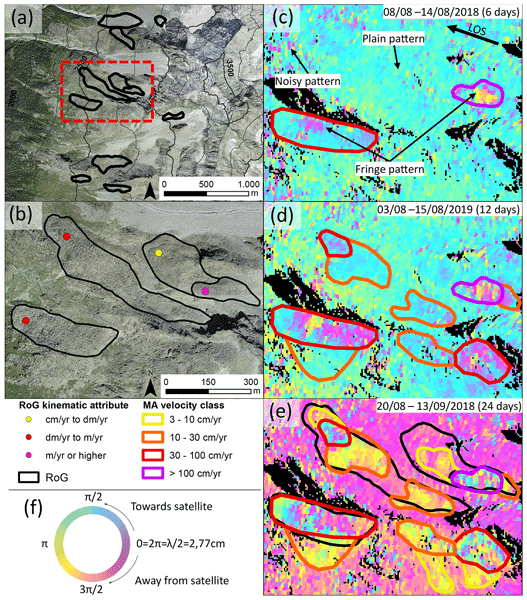
Aldo Bertone, Chloé Barboux, Xavier Bodin, Tobias Bolch, Francesco Brardinoni, Rafael Caduff, Hanne H. Christiansen, Margaret M. Darrow, Reynald Delaloye, Bernd Etzelmüller, Ole Humlum, Christophe Lambiel, Karianne S. Lilleøren, Volkmar Mair, Gabriel Pellegrinon, Line Rouyet, Lucas Ruiz, and Tazio Strozzi
The Cryosphere, 16, 2769–2792, https://doi.org/10.5194/tc-16-2769-2022, https://doi.org/10.5194/tc-16-2769-2022, 2022
Short summary
Short summary
We present the guidelines developed by the IPA Action Group and within the ESA Permafrost CCI project to include InSAR-based kinematic information in rock glacier inventories. Nine operators applied these guidelines to 11 regions worldwide; more than 3600 rock glaciers are classified according to their kinematics. We test and demonstrate the feasibility of applying common rules to produce homogeneous kinematic inventories at global scale, useful for hydrological and climate change purposes.

Frank Paul, Livia Piermattei, Désirée Treichler, Lin Gilbert, Luc Girod, Andreas Kääb, Ludivine Libert, Thomas Nagler, Tazio Strozzi, and Jan Wuite
The Cryosphere, 16, 2505–2526, https://doi.org/10.5194/tc-16-2505-2022, https://doi.org/10.5194/tc-16-2505-2022, 2022
Short summary
Short summary
Glacier surges are widespread in the Karakoram and have been intensely studied using satellite data and DEMs. We use time series of such datasets to study three glacier surges in the same region of the Karakoram. We found strongly contrasting advance rates and flow velocities, maximum velocities of 30 m d−1, and a change in the surge mechanism during a surge. A sensor comparison revealed good agreement, but steep terrain and the two smaller glaciers caused limitations for some of them.
Andrea Manconi, Alessandro C. Mondini, and the AlpArray working group
Nat. Hazards Earth Syst. Sci., 22, 1655–1664, https://doi.org/10.5194/nhess-22-1655-2022, https://doi.org/10.5194/nhess-22-1655-2022, 2022
Short summary
Short summary
Information on when, where, and how landslide events occur is the key to building complete catalogues and performing accurate hazard assessments. Here we show a procedure that allows us to benefit from the increased density of seismic sensors installed on ground for earthquake monitoring and from the unprecedented availability of satellite radar data. We show how the procedure works on a recent sequence of landslides that occurred at Piz Cengalo (Swiss Alps) in 2017.
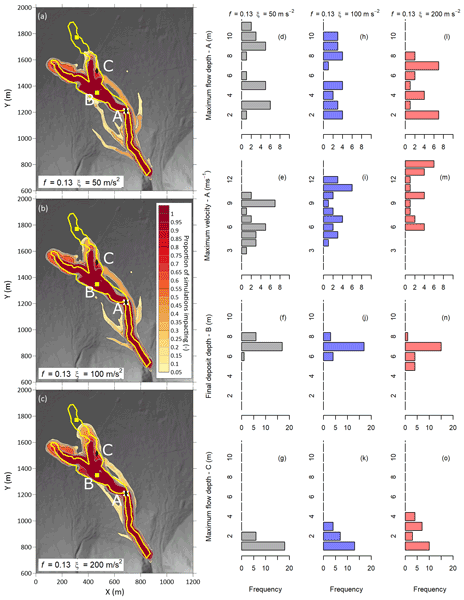
Andrew Mitchell, Sophia Zubrycky, Scott McDougall, Jordan Aaron, Mylène Jacquemart, Johannes Hübl, Roland Kaitna, and Christoph Graf
Nat. Hazards Earth Syst. Sci., 22, 1627–1654, https://doi.org/10.5194/nhess-22-1627-2022, https://doi.org/10.5194/nhess-22-1627-2022, 2022
Short summary
Short summary
Debris flows are complex, surging movements of sediment and water. Discharge observations from well-studied debris-flow channels were used as inputs for a numerical modelling study of the downstream effects of chaotic inflows. The results show that downstream impacts are sensitive to inflow conditions. Inflow conditions for predictive modelling are highly uncertain, and our method provides a means to estimate the potential variability in future events.
Tazio Strozzi, Andreas Wiesmann, Andreas Kääb, Thomas Schellenberger, and Frank Paul
Earth Syst. Sci. Data Discuss., https://doi.org/10.5194/essd-2022-44, https://doi.org/10.5194/essd-2022-44, 2022
Revised manuscript not accepted
Short summary
Short summary
Knowledge on surface velocity of glaciers and ice caps contributes to a better understanding of a wide range of processes related to glacier dynamics, mass change and response to climate. Based on the release of historical satellite radar data from various space agencies we compiled nearly complete mosaics of winter ice surface velocities for the 1990's over the Eastern Arctic. Compared to the present state, we observe a general increase of ice velocities along with a retreat of glacier fronts.
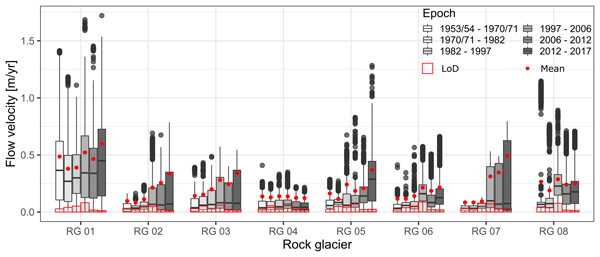
Fabian Fleischer, Florian Haas, Livia Piermattei, Madlene Pfeiffer, Tobias Heckmann, Moritz Altmann, Jakob Rom, Manuel Stark, Michael H. Wimmer, Norbert Pfeifer, and Michael Becht
The Cryosphere, 15, 5345–5369, https://doi.org/10.5194/tc-15-5345-2021, https://doi.org/10.5194/tc-15-5345-2021, 2021
Short summary
Short summary
We investigate the long-term (1953–2017) morphodynamic changes in rock glaciers in Kaunertal valley, Austria. Using a combination of historical aerial photographs and laser scanning data, we derive information on flow velocities and surface elevation changes. We observe a loss of volume and an acceleration from the late 1990s onwards. We explain this by changes in the meteorological forcing. Individual rock glaciers react to these changes to varying degrees.


